Light
def. the natural agent that stimulates sight and makes things visible.
Summary
Light is gendered in its impact on safety, visibility, and access to public space. Poor lighting in streets and transport areas heightens risks of harassment and exclusion, while urban planning has historically ignored women’s and minority groups’ needs, reproducing gendered and racial inequalities in the built environment. From biased photographic technologies to unsafe camp conditions, access to and control of light reflect broader social hierarchies of power and visibility.
Who is seen?
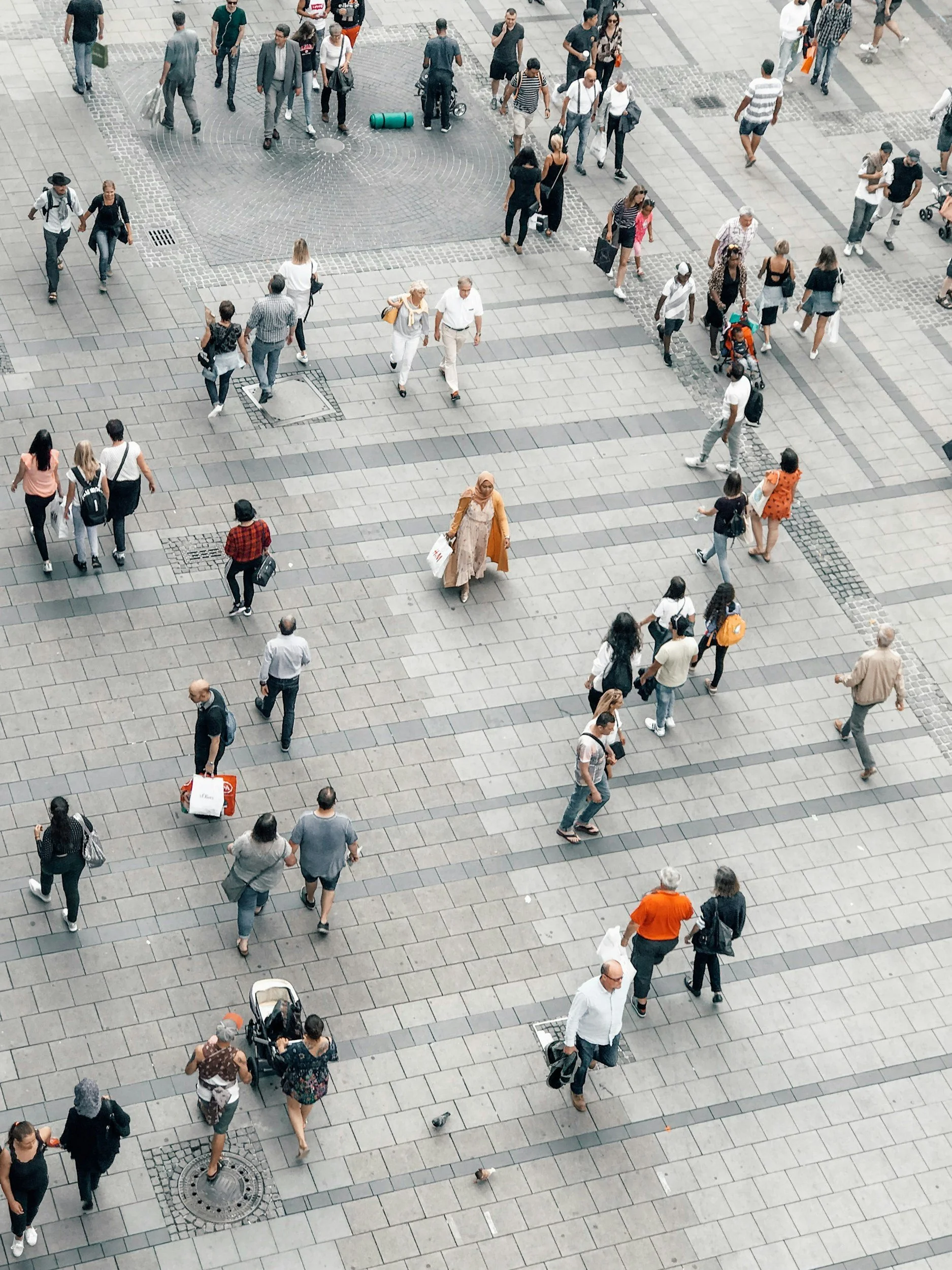
Lighting shapes how we move through cities, who feels safe in public, and whose faces are visible in media. From street design to photographic technology, light reflects the biases built into our environments.
Public safety
Poorly lit streets, parks, and transport stations can make women and gender-diverse people feel unsafe or at greater risk of harassment at night.
A 2020 report from the Department of Transportation in the United Kingdom showed that of those who reported sexual harassment, 42% reported the incident happening on the street or while walking around.
Media and art
Beyond gender, photograph printing machines were originally calibrated on white skin, using a ‘Kodak Shirley’ card. Calibrating these machines to prefer lighter skin tones could render people with darker skin tones unrecognisable, hiding the faces of Black subjects.
Urban planning and design
Poor lighting in public places is part of a larger problem around urban planning and design. Women have historically been excluded from decisions in the built environment, leading to urban spaces that do not cater for women and other minority groups.
In the context of European colonialism and Jim Crow in the US, urban planning was also closely aligned with racial and ethnic segregation.
Lighting in camps: a case study
In 2018, Oxfam released a study showing the effects of poor lighting on women’s usage of sanitation facilities in camps.
Camps are spaces for people seeking refuge from conflict and disasters such as climate change; however, they can be dangerous, especially for women and girls. The study found that..
Lighting – at sanitation facilities or elsewhere – can improve feelings of safety, but alone will not reduce gender-based violence (GBV). There are very high levels of fear of GBV in camps, especially among women and girls.
1
People need multiple forms of good-quality lighting for it to be an effective safety measure. There are wider benefits to lighting, such as enabling easier and cleaner use of sanitation facilities, avoiding vermin, and promoting social and economic activity.
2
Access to — and control of — lighting is affected by gender and power dynamics; women and girls often have less access to lighting than men and boys, even when lights are distributed to all households. The most vulnerable people are at greater risk of being targeted for theft.
3
Source: Oxfam, December 2018

-
It is difficult to add in-text citations in this format. If you have questions about a particular source or data point, please submit a source request, and I will get back to you with in-text citations.
Cui, Qinyu, Pixin Gong, Guang Yang, Shuyu Zhang, Yiting Huang, Shixuan Shen, Bingcai Wei, and Yu Chen. 2023. "Women-Oriented Evaluation of Perceived Safety of Walking Routes between Home and Mass Transit: A Case Study and Methodology Test in Guangzhou" Buildings 13, no. 3: 715.
Adams, L., et al. 2020 Sexual Harassment Survey. London: Government Equalities Office, 2021.
Terraza, Horacio; Orlando, Maria Beatriz; Lakovits, Carina; Lopes Janik, Vanessa; Kalashyan, Anna. Handbook for Gender-Inclusive Urban Planning and Design. Washington, DC: World Bank, 2020.
National Gallery of Art. “The ‘Shirley Card’ Legacy: Artists Correcting for Photography’s Racial Bias.” Stories – National Gallery of Art, April 7, 2023.
Oxfam; Humanitarian Innovation Fund; WEDC (Loughborough University). Shining a Light: How Lighting in or around Sanitation Facilities Affects the Risk of Gender-Based Violence in Camps. Oxford: Oxfam GB, 2018.
Published 07 November 2025